On the map and alphabetically

Běšiny, originally called Bessin, later Bieschiny or Biessiny, is located in a valley near Drnové potok.
The oldest known written evidence of the existence of the Chanovice was found in the papal tithe registers. There, in 1352, the Chanovicky church is mentioned and marked as a parish church
The village of Dolany is located in the valley of the Úhlava river 6 km north of the district town of Klatov.
Hartmanice is probably the oldest village of the border forest, which was called Gabreta by the Celts.
The first written mention of the village of Hrádek dates from 1298.
Plánice, located in the Klatovsk region, is an increasingly sought-after place for recreation and relaxation due to its picturesqueness, history, architectural monuments, the beautiful nature of its surroundings and sports activities.
Strašín is located about 15 km southeast of Sušice and 9 km northeast of the Kašperské Hory in the district of Klatovy at an altitude of 650 m
In addition to the swimming pool, the local water park has a toboggan, whirlpool, sauna, climbing wall, fitness and refreshments.
Length 13 km. The tip is intended for pedestrians, with minor changes it can also be recommended for cyclists.
St. Bartholomew's Church was originally the parish church for the village of Podolí.
The castle chapel was originally built by the builder J. Wohrdn in 1654.
Eurocamp Běšiny with year-round operation offers a pleasant holiday with the possibility of trips to the western and central Šumava region
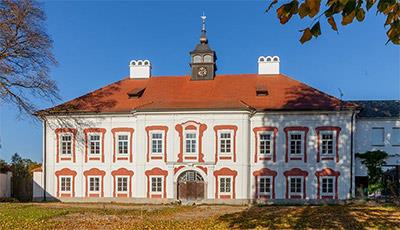
Originally in Běšine, a feudal fortress stood in the center of the village between two ponds, which was rebuilt into a Renaissance castle in the first half of the 17th century.
The Hořákov Castle is one of the lesser-known buildings in the Běšinsk region.
In 1352, the village was listed under the name Vloh, later Ouhlo.
Two educational trails pass through the surroundings of Bolešin "Wandering around Bolešin I. and II.
The first written mention of Bolešine is from 1524.
Břežany is located in the fertile area of the Horažďovická uplands.
The village of Budětice is located in the district of Klatovy and the territory of the village is part of the Buděticko Nature Park.
Bukovník is a small village with an interesting history.
Renaissance pearl Pošumaví. The castle is currently dedicated to cold weapons and armor and the phenomenon of historical swordsmanship.
The castle with a waterside yard is located on the edge of Nemilkovo. The previously devastated building is currently coming back to life. Cultural and social events.
The original church in Chanovice is dated as late Romanesque from the first half of the 13th century.
Permanent exhibition of the production and creation of excellent Czech folk craftsmen and in the grounds of the castle in Chanovice.
Information center in Chanovice
The top of the Chlum hill was chosen for the construction because of its location near the village and on the edge of the Chanovské ridge
American Garden Arboretum National Natural Monument.
A well-known excursion spot above Chudenice with a lookout tower, an excursion restaurant and a natural amphitheater.
An old linden tree near the old castle
Cemetery chapel in Chudenice. Starting point at Bolfánek.
Where did the goat riot take place in Chudenice?
Around the castle Lázeň St. Wolfganga is spread over by the English park.
The place based on which the libretto for the opera Rusalka was created.
Lázeň castle under Žďár hill.
Dobrovský stayed in Chudenice from 1816 to 1828 as a guest of Count Eugen Černín, who was a famous scholar and whose castle Lázeň near Chudenice was visited by the most prominent Czech scholars of the time.
A piece of Japan in Chudenice
The town of Chudenice is located approximately 15 km northwest of Klatov in the heart of the Kdyńsko - Chudenice Highlands at an altitude of 488 m above sea level.
The first mentions of Čihan according to preserved chronicles date from the end of the 15th century.
The first written mention of the village of Čimoice dates from 1357.
Mountain hut on top of Mount Svatobor in Šumava, built in 1895. Lookout tower with a wonderful view.
The history of the village dates back to the Middle Ages, the first mention is from 1372
Church of St. Peter and Paul in Dolany was built in 1794-99.
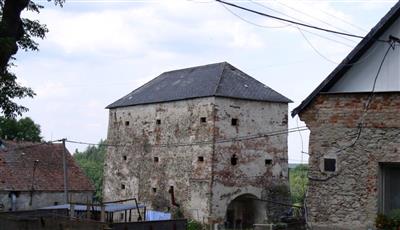
The fortress in its present form was built by the lords of Dolan in the first half of the 15th century.
Komošín Castle is first mentioned in 1334.
The nature reserve Běleč is located west of the town of Švihov.
Malechov is a local part of the village of Dolany. The village is located between Dolany and Švihov.
The monument to the fallen in Dolany was ceremoniously unveiled already on October 10, 1920 as one of the first in Klatovsk.
The wooded hill of Doubrava is a dominant feature of the northwestern surroundings of Klatovy.
The first mention of the village of Svrčovec is in a record from 1334, in which Mr. Púta from Svrčovce is mentioned as the owner.
The village of Výrov is located on the banks of the Úhlava river, just outside Malechov.
The first reports of settlement date from 1045.
The first written report about the village of Dražovice dates from 1356.
The first written document about the family (Protiwa de Fridburg) dates from 1349.
The museum was inaugurated on July 9, 1997.
Church of St. Vintière is probably the only one of this kind in the world.
The large-leaved linden tree (Tilia platyphyllos) stands near the church of St. Vintíre is not far from a well with healing water.
Studánka is located near the church of St. Vintière on Dobrá Voda near Hartmanice
Dobrá Voda is a local part of Hartmanice, from which it is about 2 km south.
The village of Dolejší Krušec is first mentioned and confirmed in writing in the first half of the 14th century.
Like the settlement of Hořejší Těšov, this village owes its origin to gold mining.
Since the Middle Ages, Bohemia and the Danube have been connected by the historic Golden Route, which was named after the wealth it brought.
At the foot of Hamižná Hill, which has been a nature reserve since 1995, there is a Šumava conservation area with a small educational trail.
In 1881, the Hartmanic-Kundratic Jewish community decided to build a synagogue.
Hořejší Krušec is a local part of Hartmanice.
The village of Hořejší Těšov lies above the Pstružné potok valley.
Javoří is a local part of Hartmanice.
The settlement of Keply represented one of the entrances to the Dobrá Voda military training area.
Kochánov is one of the Kralovák manors that were scattered across Šumava.
The territory of the Kochánov Nature Park concentrates within its borders all large forest units in the Javorná - Čachrov area and the section of Otava from Nové Městeček to Červený Dvorce.
The castle in Kundratice was rebuilt to its present form in 1840 by the ancestors of the poet Villani.
A settlement near Hartmanice with a castle
Video guide to the cycle trip around Hartmanice called From Rovina cottage to Hartmanice and through Pekelské údolí to Skelnou
The first mentions of the village of Palvínov were preserved only from the 16th century.
Radkov is a village that disappeared in the 1950s above Pekelský údolí at the source of Pstružné potok.
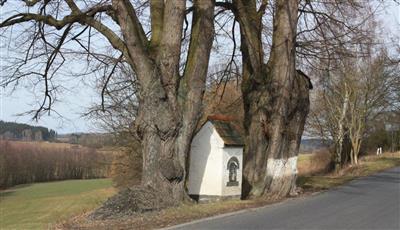
The niche chapel on the road from Palvínov to Mouřenec probably stands on the site of the grave of the victims of the Thirty Years' War.
The municipal information center is located in the library building in Hartmanice.
The chapel in Vatětice was created thanks to the initiative of the current owner of the land.
The high location of Vlastějov allows for beautiful distant views in good weather.
Žežulka is one of the places where the history of Šumava and its natural beauty combine.
The first written mention of the village dates from 1045.
The first written mention of the village of Hnačov is from 1411
There is also a former brewery near the castle.
The newly reconstructed church at the cemetery in Horažďovice.
The church in Horaždovice on the square.
The Jewish cemetery in Horaždovice was restored at the end of the last century
The castle in Horažďovice is located near the square.
Former butcher shops in Horažďovice
Pilgrimage chapel near Horažďovice.
Prácheň Castle was probably built in the 12th century. and took over the task of guarding the Pootava Basin.
The monastery church of the Virgin Mary in Horažďovice stands on the site of a chapel that was built in honor of St. Michael
You can come to Horaždovice Square through the Red Gate.
In Horažďovice, a city founded in 1278, there are certainly a number of monuments worth noting.
There are two campsites in the city, and when passing through the city, paddlers have to cross four weirs ("Špička", "Lipky", "Mrskoš" and "Jarov").
There is a scout clubhouse and a children's playground.
Red circuit: Horažďovice – Svatá Anna – Boubín – Prácheň – Horažďovice (approx. 10 km). For pedestrians.
The castle stands on the site of a former castle from the 14th century.
Memorial plaque to František Pravda in Hrádek on the building of the former school, today the post office.
The Hrádeck linden is a memorial tree near the village of Hrádek, growing north of Sušice
The ruins of a Gothic fortress founded probably in the first half of the 14th century and abandoned in the 16th century.
Chapel of Our Lady of Help at the children's camp in Odolenov.
Above the settlement of Odolenov, on the left side when traveling to Svatobor, an interesting location covered with junipers will appear.
Statue of St. Jan Nepomucký on the road from Hrádek to Sušice.
The nature reserve is located in the valley below the village of Zbynice in Sušick..
One of the mysterious places of Pošumaví is located near Hrádek.
The first written mention of the village of Hrádek dates from 1298.
The first written mention of Černíč is from 1377.
The first written mention of Hradešice is from 1360.
Anyone who wants to learn something about the history of the town of Kasejovice should go through the local educational trail.
Information center in Kasejovice
The town of Kasejovice is located in the Nepomuck Highlands. The first written mention of the town is from 1264.
The information center in Kolinc is located in the library building above the church.
The cemetery was allegedly founded in the first half of the 14th century.
In 1721, a baroque castle was built on the site of the former fortress, which is followed by a newly renovated classicist wing, which today serves as a guest house.
The most interesting tree in the park is the pinnate oak (Quercus robur v. filicifolia).
Mlázovy Castle is celebrating its 300th anniversary, on that occasion a new exhibition on the history of the castle was opened and the restored Baroque black kitchen was made available.
The original settlement of Kolinec, sandwiched between the hills of Rovina (722 m) and Vidhošť (795 m), was founded by gold miners.
The oldest written mention of the village is from 1364
Hliné Újezd is a local part of Malý Bor.
The first written mention of the village of Maňovice dates from 1366.
The Mlázovy Information Centre is located within the premises of the château.
In addition to the castle premises itself, there is an exhibition of Prague marionettes, regional folklore exhibitions and a permanent exhibition dedicated to mineralogy and traditional crafts, among other things.
Most likely, Myslív was founded during the construction of the Nepomuck monastery by the "Cistercian" order of monks from Ebrach.
A model natural garden, which was the first to be certified for this purpose in the Pilsen region.
18 individually furnished rooms and suites are available for guests, which are as unique as the hotel itself
Otěšín is a local part of the town of Nalžovské Hory, from which it is located about 3 km south.
A settlement falling under the town of Nalžovské Hory.
Těchonice is a local part of the city of Nalžovské Hory.
Chapel of St. John of Nepomuck was completed and consecrated in 1909.
Velenovy is a local part of the city of Nalžovské Hory.
The first written mention of the village of Nalžovy dates from 1380
Family tomb of the Lamberk family.
The Church of the Assumption of the Virgin Mary in Nezamyslice is a dominant building, visible from afar.
The former morgue is now a museum.
The castle in Záluží, today functioning as an accommodation facility.
Picturesque village in the Šumava foothills.
Horaždovice - Babín - Kadov - Chanovice - Kvášňovice - Pačejov - Třebomyslice. For cyclists.
Horaždovice - Třebomyslice - Velký Bor - Chanovice - Oselce - Pačejov - Horaždovice. For cyclists.
Olšany is a small village located by the Kovčín Pond.
Educational trail through a lesser-known corner of Pošumaví.
In the Middle Ages, the village of Pačejov was owned by the monastery of St. George at Prague Castle
The English park built in 1868 according to the project of the architect Bedřich Wunscher is surrounded by the Otava River and Mlýnská stoka.
The terrace with the garden was built at the end of the 17th century on the site of the former castle park.
Early Gothic Church of St. Peter and Paul in Petrovice dates from the beginning of the 13th century.
The first mentions of the former waterfront yard are available from the 15th century.
The first mention of the village appears in 1551
The mansion, of which we find the first mention in historical sources in 1584, was built in Plánice only in the 16th century.
The current baroque form of the church of St. Blažeje in Plánica was created under the leadership of builder Johan Trajler in 1755.
Plánice boasts the birthplace of the famous Czech inventor František Křižík
Hotel with a restaurant with a capacity of 90 seats and international and Czech cuisine.
The Kratická fortress ceased to function as a manor house after 1638, when the Šternberks sold the planic manor to Jaroslav Bořita from Martinice.
Křížovice lies in the picturesque valley of the Křížovický stream, also called Voborka.
The village of Kvasetice is mentioned for the first time in the inventory of the property of the Zelená Hora manor in 1551.
The first written mention of the village dates from 1558.
Prof. PhDr. Vladimír Helfert was born on April 24, 1886 in Plánice.
Mlynářovice (formerly also Mlynařovice) gradually fell under Němčice, Mlýnské Struhadlo, Újezd u Plánice from 1869, and only since 1976 has it been part of the town of Plánice
Czech Edison. This is how the Czech inventor and entrepreneur František Křižík is called.
Not far from the Nice church, there is a chapel of the Virgin Mary above a spring above a well with supposedly healing radioactive water.
The impetus for the construction of the Church of the Nativity of the Virgin Mary in Nicov was given in 1720 by Adolf Bernard of Martinice, the then owner of the Planice estate.
The legend of the statue of the Virgin Mary in Nice.
Nová Plánice is a local part of the town of Plánice.
The Plánický hreben nature park was declared in 1979.
The village of Pohoří is located at the northwestern foot of Stírka hill under the hill "Hora" - Pohoří.
The column of the Holy Trinity in Plánice is a cultural monument registered in the state list of monuments.
The first written mention of the village of Štipoklasy dates from 1558.
The first mention of Vracov can be found in the inventory of the property of the Zelená Hora manor in 1558.
A massive brick wall of unusual shape in Zbyslav.
A chapel with a healing spring near Zbyslav
The first written mention of Zbyslav comes from 1552.
In Zdebořice, the chapel of St. Vojtěcha and the massive rock above it, from which in good weather there is a nice view of the wide surroundings.
The single nave Gothic church of St. Jiljí was built in the 14th century in the Gothic style.
We find the first written mention of the village in 1352, when it is written as Sdoborzicz and is therefore probably the oldest settlement in Plánick
The information centre is located on the first floor of the municipal office building, within the premises of the town library
The first written mention is from 1045 in the donation deed of Břetislav I to the Břevnov Monastery.
Chapel of St. Vintíře is located under the peak of the Březník mountain by the so-called Vintířová rock.
The original tomb of the Měchur family was built in 1813 by Jan Měchura, a wealthy Prague lawyer, farmer and father-in-law of František Palacký
The first written mention of the village of Předslav dates from 1352.
Center for environmental education, which implements one-day and multi-day educational courses for school groups.
Rabí is notable not only for its primacy among the most extensive castle ruins in Bohemia.
Glass statue of St. John of Nepomuck on the bridge over the Otava in life size.
The Rabí Town Information Centre is located on the ground floor of the multifunctional building at No. 57 on the square, in the municipal office.
The original wooden synagogue in Slatina stood in the center of the ghetto.
A three-kilometer walking circuit around the Soběšické grove in a wonderful forest environment on the very edge of the Lamber estate, where the nobility organized spectacular hunts.
Soběšice lies under the mountain Bitovín, where one of the battles of the Thirty Years' War took place.
Horaždovice - Prácheň - Velké Hydčice - Žichovice - Hradešice - Břežany - Třebomyslice - Horaždovice. For cyclists.
The area in Lipká offers residents and visitors of Horažďovice a wide range of sporting activities - there is a football field, tennis courts, a skate park and a boating camp
Studánka is also called Strašínský důlek.
The cave is located northwest of Strašín, on the right side of the road leading from Strašín to Sušice, at the foot of Na Palových Hill.
The private Pidipivovárek u Pujiče is located in the small village of Lazny in Pošumaví.
The pilgrimage and parish church is the dominant feature of the village of Strašín.
It offers year-round accommodation in romantic apartments
The brewery was opened in autumn 2014.
The listed chapel of St. Bartholomew near Sveradice.
The first written mention of the village dates from 1264.
The educational trail is 26 km long and is dedicated to historical and natural attractions in Švihov and its immediate surroundings.
The information center in Švihov is located in the town hall building.
The village of Jíno is a local part of the town of Švihov.
The Švihov Water Castle has a unique place among fortification structures.
The town of Švihov is located on a former country road in the beautiful valley of the Úhlava River, ten kilometers north of Klatov.
The dominant feature of Týnec is the Church of the Assumption of the Virgin Mary and the Baroque castle.
The first written report about Týnec dates from 1227.
The first written mention of the village dates from 1551
Velhartice Castle - a romantic Šumava castle with a completely unique stone bridge and a late Renaissance castle wing.
Chotěšov is a village belonging to the municipality of Velhartice.
It is said that the story of the legend from the ballad The Wedding Shirt by Karel Jaromír Erben from the Kytice collection was supposed to take place here
The Gothic reconstruction of the late Romanesque sanctuary of the Nativity of the Virgin Mary, dominating Velhartice, took place around 1330.
The first mention of this local part of the village of Velhartice dates from 1511.
The Jewish cemetery in Velhartice was founded in 1858.
Nemilkov Castle is a Renaissance Baroque mansion built on the remains of a medieval Gothic fortress.
Older residents still remember Jan Werich's stays in Velhartick.
Velhartice is located in the Šumava foothills above the river Ostružna at an average altitude of 622 m above sea level.
Hradiště Prácheň was created as part of the castle system of early Přemyslov Bohemia sometime in the middle of the 10th century.
The first written mention of the village of Velké Hydčice is from 1045.
The first written mention of Velký Bor is from 1283.
The village is a suitable destination for cyclists.
Yellow circuit: Horažďovice – Střelské Hoštice - Horažďovice suburb (station) – Horažďovice (approx. 12 km). For pedestrians.
Monument to the poet JUDr. Rudolf Mayer, native of Nová Hospoda u Stránčice.
The first mention of the village dates from 1334, when it was in the possession of Dluhomil of Velhartice.
The first mention of Zborov dates back to 1384, but the original settlement is much older.
The castle in Žichovice was built at the beginning of the 17th century on the site of an older Gothic fortress.
A village that you cannot miss not only when sailing around Ottawa.
The early Baroque castle was created by rebuilding a Renaissance fortress in 1688.
Information center in the castle building in Žihobce.
One of the oldest villages in Pošumaví. The first mentions date from 1045.